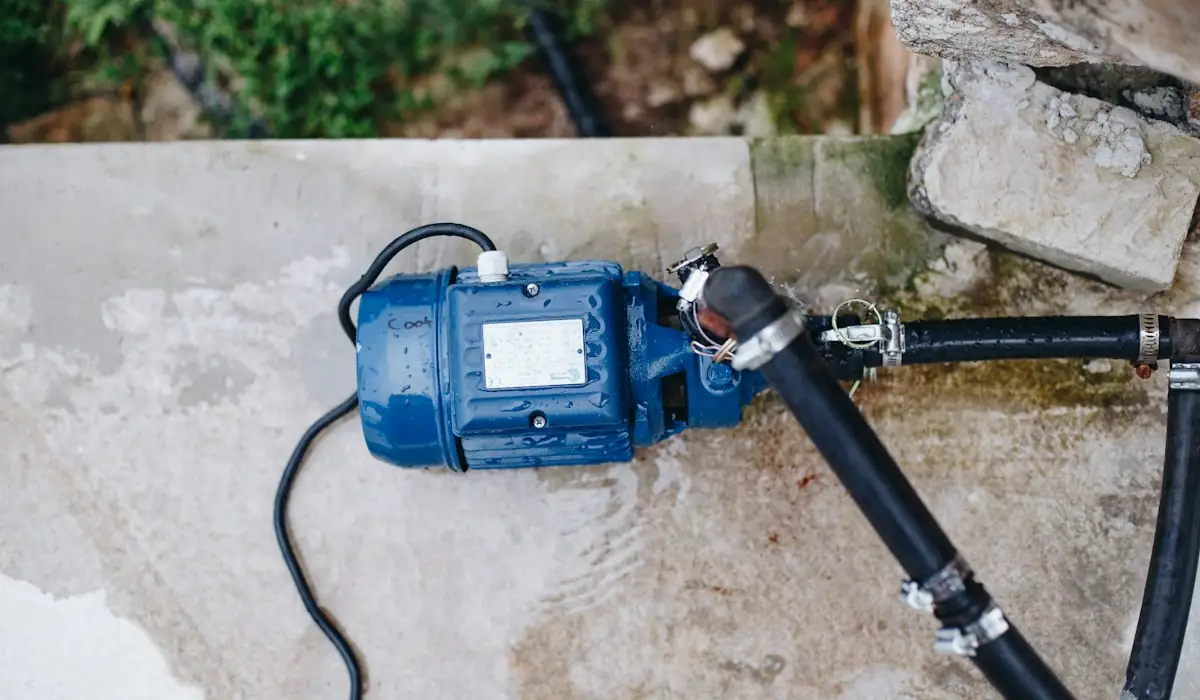
Does your home need a sump pump
Not every Brampton home has one. Many houses built in subdivisions with foundation drains connected to a storm sewer never needed a pit. Others, particularly those on lower lots, near creeks such as Etobicoke Creek, or in areas with heavy clay soil, collect enough groundwater that a pump is essential. Signs worth acting on include damp patches along the bottom of basement walls after rain, efflorescence on concrete, or water appearing at the floor drain during thaw.
If your home already has a sump pit, the questions become whether the pump is the right size and whether its discharge is set up properly.
A short visit to look at the pit, the weeping tile inlet and the basement walls usually answers the question. We will tell you plainly if a pump is unnecessary.
Pedestal or submersible
| Pedestal | Submersible | |
|---|---|---|
| Motor position | Above the pit | Inside the pit, sealed |
| Noise | Louder | Quieter, under a lid |
| Pit size | Fits narrow pits | Needs a wider pit |
| Best for | Easy access, smaller pits | Finished basements, higher volumes |
We size the pump by how often and how quickly the pit fills, not by guessing. A pump that is too small runs constantly; an oversized one short-cycles and wears its switch early.
Discharge lines and where the water goes
The discharge pipe needs a check valve so water in the line does not run back into the pit when the pump stops. Outside, the water should be directed well away from the foundation and onto your own property, not onto a neighbour's lot or directly into the sanitary sewer. Brampton has rules about where sump water may be discharged, so we follow them and explain the layout. A discharge that freezes in January is useless, so we plan the outdoor section with frost in mind.
Battery backup options
Storms that overload sewers also knock out power. A battery backup pump, installed in the same pit with its own discharge or check valve, takes over when the main pump stops or the power fails. It adds cost and a battery to maintain, but in homes with finished basements it is commonly worth discussing. A high-water alarm is a cheaper addition that at least warns you when the pit is filling faster than the pump can keep up. Water-powered backups exist too, though they require adequate municipal water pressure and a suitable layout.
Once installed, a pump needs occasional attention. Our sump pump repair page covers testing, and the library also has a short guide to fixing a running toilet for other common household jobs. We install pumps throughout Brampton, including homes in Fletcher's Meadow.
Signs you need this job
- Pump motor humming while the pit level never drops
- The float sticking against the liner
- Floor-drain puddles showing up after every downpour
- A discharge line frozen at the exit
On the job, in order
- Pull the plug on the old pump and bail the crock dry
- Swap the pump and check valve on new unions
- Seal the discharge through the wall
- Flood the crock again and see the float switch kick in
Straight answers
How long does a sump pump last?
Lifespan varies with how often it runs and the build quality of the unit. Many homeowners plan for replacement within roughly seven to ten years, and sooner for heavily used pumps.
Can a sump pump discharge into the sanitary sewer?
In Brampton, discharging groundwater into the sanitary sewer is generally not permitted. We route it outdoors in line with local rules.
Is a battery backup required?
It is not mandatory, but it protects against pump failure and power outages during storms.
Ready when you are. One call, a real plumber, an arrival window.
Call now(365) 517-6415