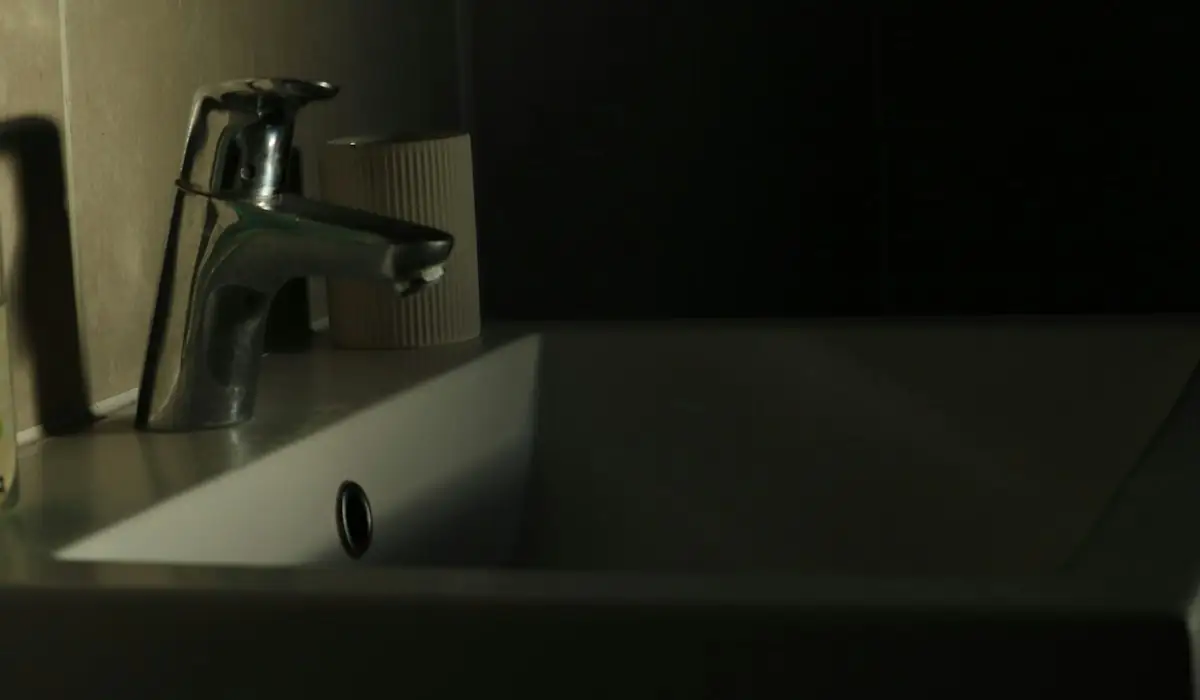
Pull the stopper
- Clear the cabinet and put a towel under the drain.
- Behind the drain pipe, find the pivot nut where a horizontal rod enters the tailpiece.
- Unscrew the nut, pull the rod back and lift the stopper out from above.
- Clean the stopper and the inside of the drain with an old toothbrush or a plastic drain-cleaning strip.
- Reinstall, making sure the rod passes through the hole in the stopper.
If that does not fix it
Place a bucket below the trap. Loosen the two slip nuts by hand or with a wrench and remove the U-shaped trap. Clean it out, then check the trap arm going into the wall with a flashlight. A small hand auger fed into the wall pipe clears what lies beyond.
Reassemble and test
Make sure washers are seated, tighten slip nuts hand-tight plus a quarter turn, then fill the basin and let it drain while checking for drips with a dry tissue.
Prevent the next one
- Clean the stopper monthly.
- Wipe hair from the basin into the garbage after shaving or brushing.
- Run hot water for a minute after using thick toothpaste or soap.
If several bathroom fixtures are slow at once, see bathroom drain cleaning.
What usually comes out
In most Brampton bathrooms we pull a grey rope of hair bound with toothpaste and soap scum, sometimes with a lost earring or cap inside it. If the trap holds black, gritty sludge instead, the vanity drain may be poorly vented or sloped; that is worth a look by a plumber rather than another round of cleaning.
Tools worth keeping in the basement
- Two plungers: a flanged one for bowls, a flat cup for basins
- A hand snake around twenty-five feet long
- Adjustable and basin wrenches
- A bucket, rags and a flashlight
- A tag on the main shut-off valve
Ready when you are. One call, a real plumber, an arrival window.
Call now(365) 517-6415